Why Patios Flood and What Causes Standing Water
Water pools on a patio for a handful of reasons. None of them are mysterious, and all of them are avoidable when the job is done correctly from the start.
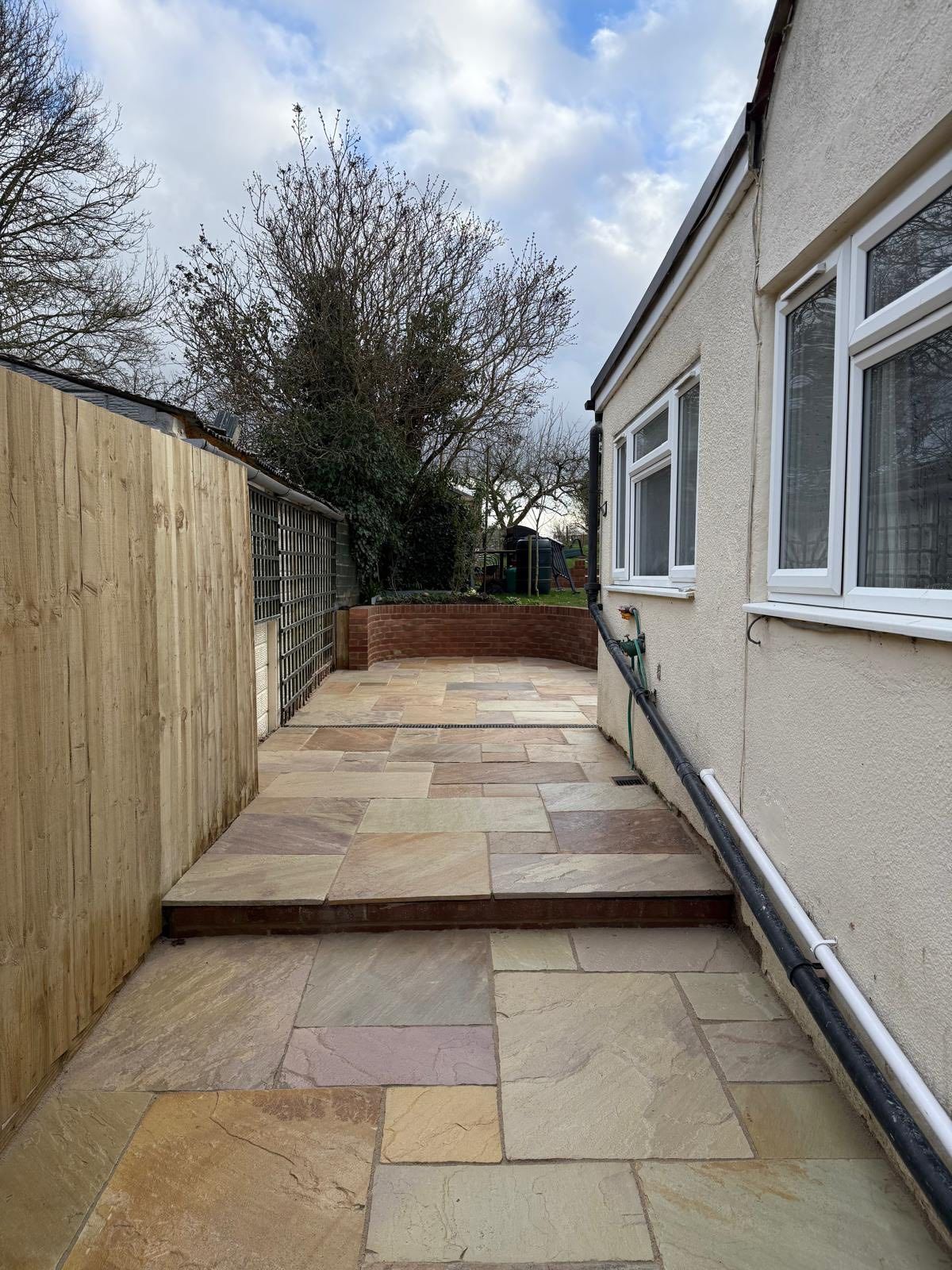
No fall in the surface. A patio needs a slight slope, called a fall, to direct water away from the house and towards a drainage point. Without it, water sits wherever it lands. Many patios that look level to the eye are actually flat or, worse, sloping back towards the building. Even a modest rainfall becomes a problem.
Poor joint design. On a paved patio, the joints between slabs matter more than most people realise. If they are filled solid with no drainage path, water cannot escape downward. It spreads across the surface instead, looking for somewhere to go.
No drainage outlet. A fall is only useful if it leads somewhere. Some patios are installed with a gradient but no channel drain, linear drain, or soakaway to receive the water. The result is water running off the patio edge and pooling at the base of a wall or fence.
A subbase that holds water. Beneath the surface, the subbase and bedding layer need to be appropriate for the conditions. In heavier clay soils, which are common across much of Oxfordshire, water does not drain away naturally. Without a permeable subbase or a drainage route built into the construction, the patio becomes a shallow pond after heavy rain.
Ground movement over time. Even a patio that drained well when it was first laid can develop problems. Frost, tree roots, and ground settlement can shift slabs and create low spots where water collects. If you have noticed the flooding getting worse over the years, this is often why.
How Correct Falls, Joints, and Drainage Solve It
Good patio drainage is not one single fix. It is a combination of several things, all of which need to be right at the same time.
The fall is the starting point. A properly installed patio should slope away from the house at a minimum gradient, typically around one in 60 to one in 80. That is not visible to the naked eye, but it is enough to move water reliably. The M&C team sets this gradient during the subbase preparation stage, not as an afterthought at the end.
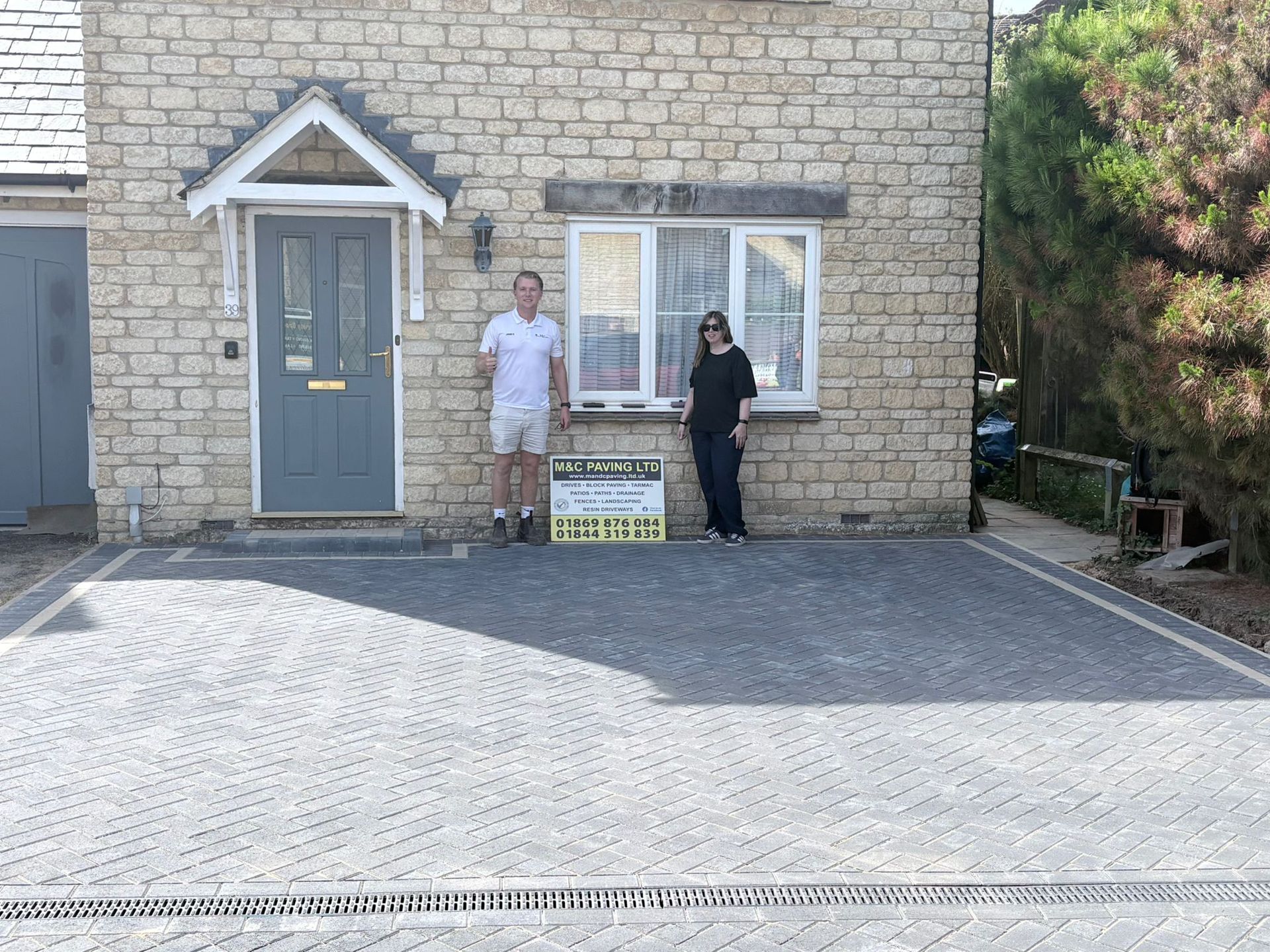
Joints play their part too. Open, permeable joints allow water to pass through the surface and into the subbase below. On a patio with larger slabs, channel drains can be set into the surface at low points to collect and redirect water. These can be discreet, sitting flush with the paving and barely noticeable until you look for them.
For gardens with heavy clay soil or a high water table, a soakaway is often the right answer. Water is channelled from the patio into a buried chamber filled with aggregate, where it disperses slowly into the surrounding ground. This is particularly common in villages around Bicester and across the Thame area, where clay soils make surface drainage difficult.
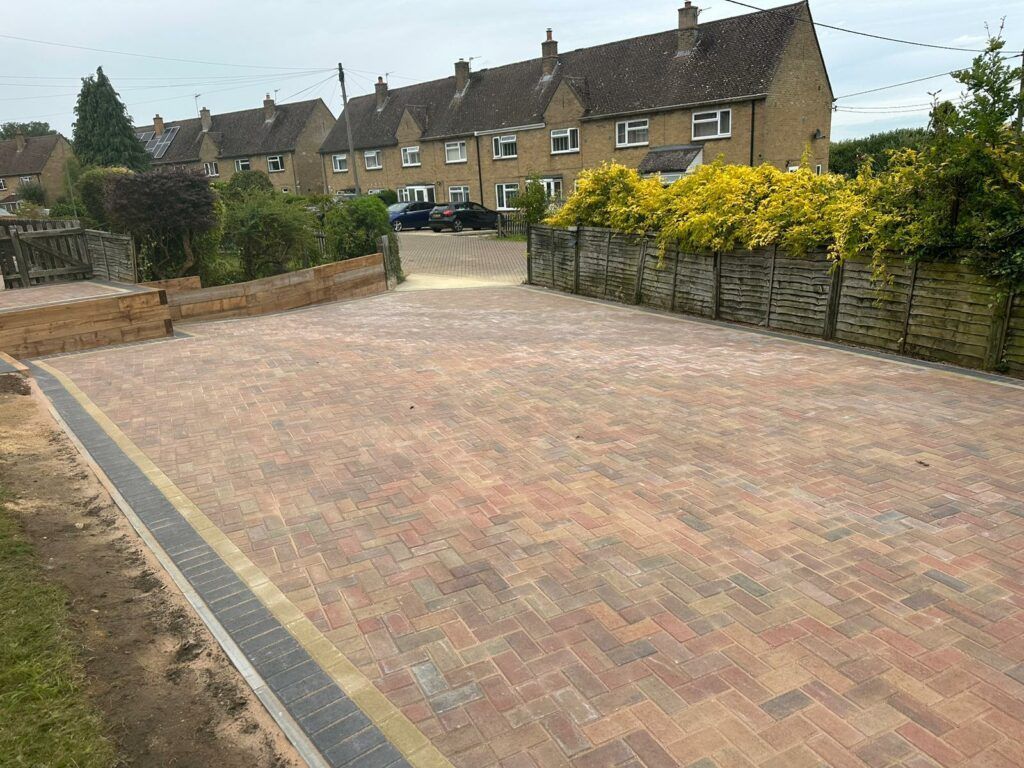
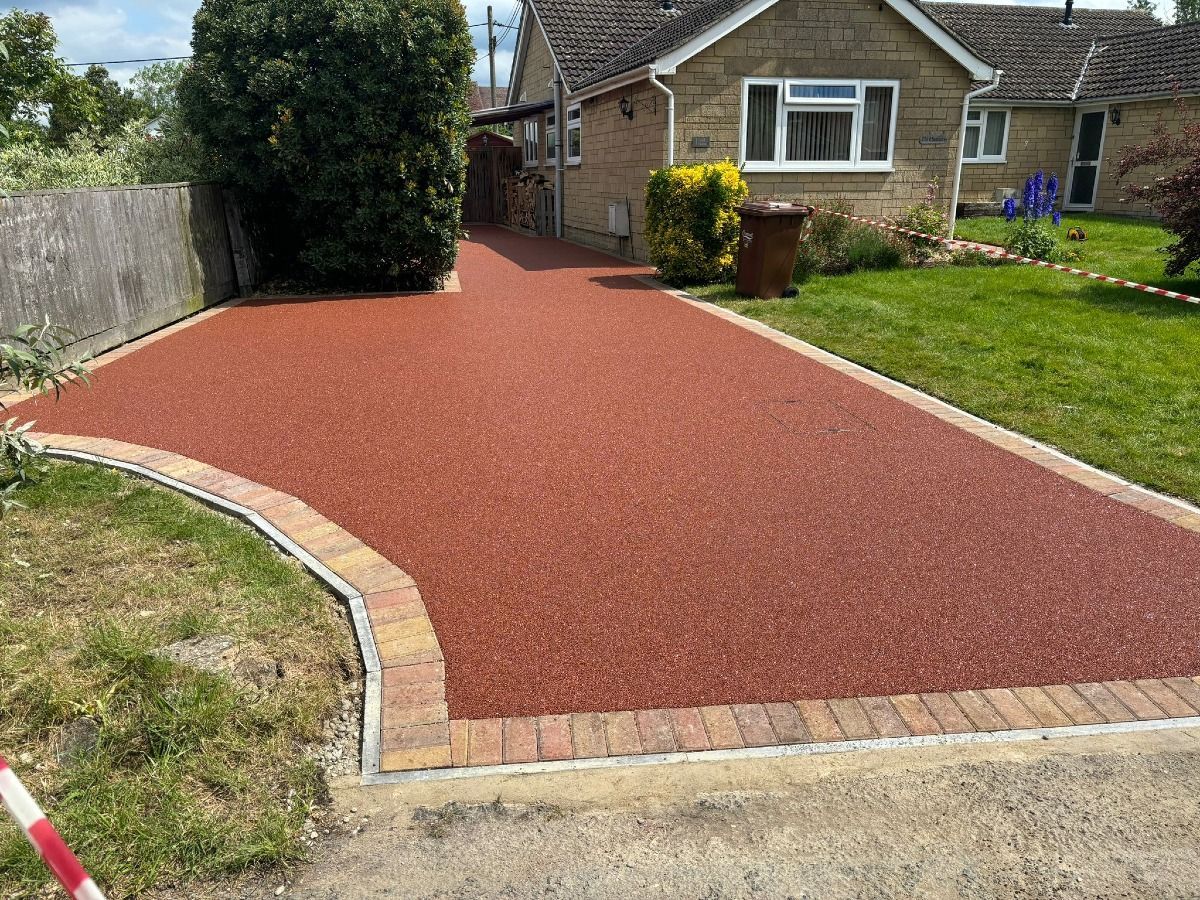
Permeable surfaces are another option. Rather than moving water off the patio, a permeable design lets it pass straight through. This works well in certain situations and can reduce the load on drainage channels entirely.
The key point is that none of these solutions work in isolation. A channel drain with no fall leading to it will not perform. A soakaway connected to a patio that sits in a hollow will back up. Everything has to work together.
Fixing an Existing Patio or Building a New One That Drains Properly
If your current patio floods, you have two options: remedial work on what is there, or a full replacement.
Remedial work is worth considering when the patio structure is otherwise sound. Sometimes the fix is as simple as lifting a section of slabs, adjusting the bedding layer to correct the fall, and relaying them. In other cases, a channel drain can be introduced to collect water that was previously running nowhere useful. The
M&C team can assess what is there and give you an honest view of whether a repair makes sense or whether replacement is the better investment.
A full replacement gives you the chance to get everything right from the ground up. That means specifying the correct subbase depth for your soil type, building in the right falls across the whole area, and choosing a drainage strategy that suits your garden layout. It also means the finished patio looks exactly how you want it, not just repaired.
We have been installing
bespoke patios across Oxfordshire for over 30 years, and drainage planning is built into every job we do. You can see examples of our finished work in the
projects gallery, including patios where drainage was a specific requirement the homeowner needed to solve.
Our 10-Year M&C Workmanship Guarantee covers the work we carry out, and every job is completed by our own team, not subcontractors. With over 470 reviews on TrustATrader at 4.92 stars, and 4.9 stars on Google, you can read what other Oxfordshire homeowners have said before you decide.
A patio that drains properly is not a luxury. It is how a patio should work. If yours is not performing, the problem is almost certainly fixable.
To request a free, no-obligation quote, get in touch with the M&C team through the
contact page.